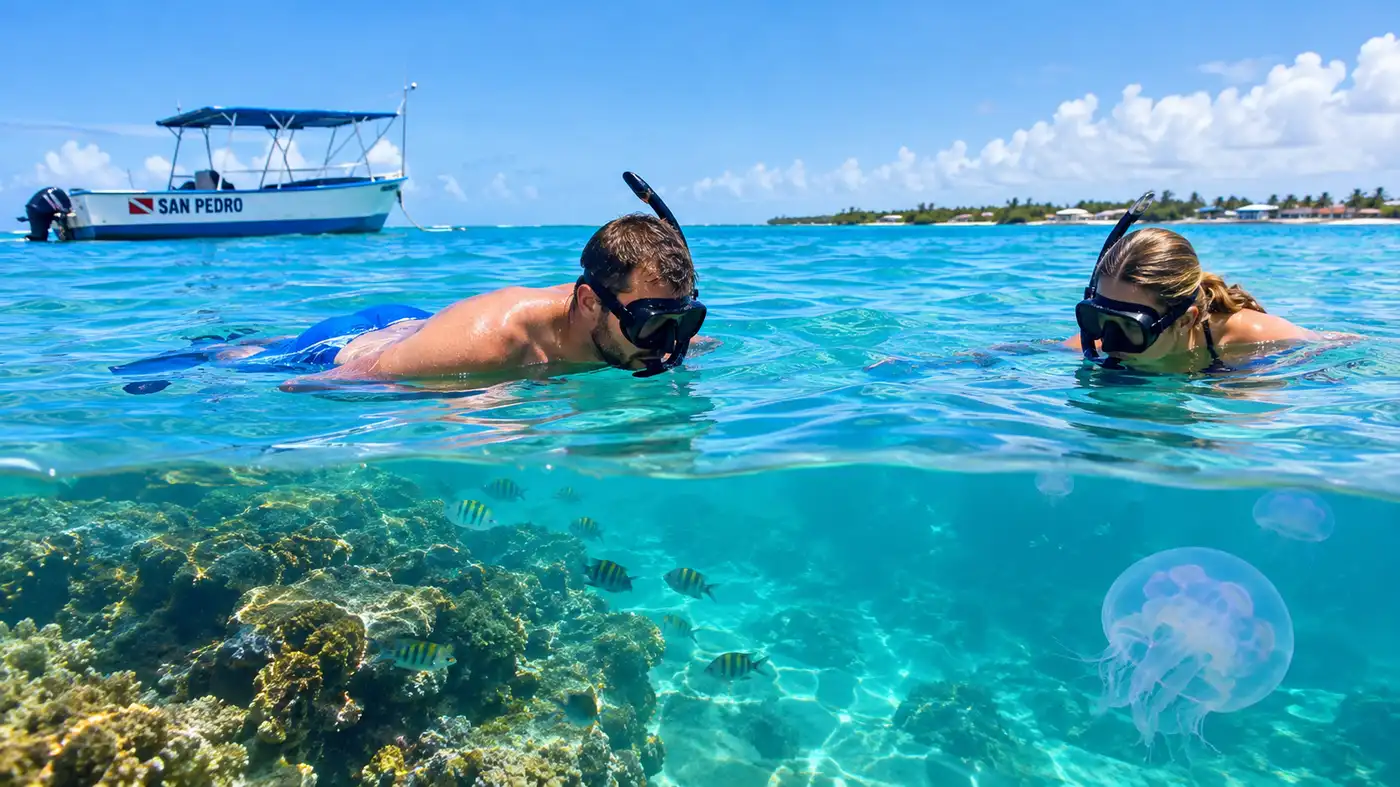
Safety Guide Avoiding Currents and Jellyfish
The Caribbean looks entirely docile from a dock in San Pedro. You see clear turquoise water stretching toward the reef line, maybe a pelican resting on a pylon, and it is easy to assume swimming out here is basically like wading through a giant bathtub. It is not. After decades of kicking around the Belize Barrier Reef, I can tell you that real open water has teeth, mostly in the form of stealthy rips, tidal cuts, and tiny floating stingers that ruin your week if you ignore basic snorkeling safety tips.
Most visitors never run into severe trouble because boat guides keep them on a tight leash. If you venture out on independent reef trips, swim off deeper docks, or catch a shifting wind during seasonal blooms, you need a solid mental map of what is happening under the surface. Here is how you handle water movement, identify stinging critters, and manage yourself safely along the cayes without turning an afternoon of coral gazing into an emergency room visit.
Book your snorkeling san pedro belize experience:
Understanding Currents Around the Belize Barrier Reef
Water moves strangely across Ambergris Caye. The barrier reef sits roughly half a mile to a mile offshore, acting like a giant natural breakwater. Waves crash over the top of the outer reef crest, dumping thousands of gallons of seawater into the shallow lagoon flat between the reef and the island. That incoming water has to escape somewhere. It runs sideways inside the lagoon until it finds a deep break or channel in the coral barrier, then surges out toward the open ocean with surprising force.
Hol Chan Marine Reserve is a prime example of this dynamic. The name literally means "Little Channel" in Maya. It is a natural cut in the reef about 25 yards wide and 30 feet deep. When the tide falls, water funnels through that gap like an open drain. You might be floating along, mesmerized by a spotted eagle ray, and suddenly realize your kicks are not moving you forward anymore. Guides often herd groups along the edges of the cut for this exact reason.
Note: The passes between the reef flats feature ripping tidal undertows that can pull an exhausted swimmer toward the open sea in under three minutes; stay clear of deep channels without a boat escort.
If you get caught in a drift pulling you away from your boat or the shallows, the golden rule remains the same as ocean surf: never fight the current head-on. Swimming straight against an outflow will drain your legs in roughly five minutes, your heart rate spikes, you suck water down your snorkel tube, and real panic sets in. Swim perpendicular to the flow. Angle yourself toward the shallow coral ridges where the water slows down and you can catch your breath.
Essential Snorkeling Safety Tips for Ocean Currents
Navigating moving ocean water requires a different mindset than playing around in a pool. I have watched strong pool swimmers freeze up in open sea swells simply because the horizon keeps vanishing behind three-foot rollers. Learning how to gauge your physical limits before you step off the stern platform makes all the difference.
Your gear choice heavily impacts your ability to fight water movement. Tiny, flexible travel fins are useless if you hit a sudden sweep of incoming tide near a reef cut. You want full-foot fins with a stiff blade that move water with every downward stroke. Before booking, you might review our guide to the best time of year for snorkeling in Ambergris Caye to ensure seasonal trade winds will not be whipping up dangerous chop during your dates.
- Look for stationary markers: pick a buoy line or a specific coral head every two minutes to check if you are drifting off your original drop zone.
- Conserve kicking energy: use wide, slow scissor kicks from the hip rather than rapid flutter kicks that tire your calves.
- Keep your snorkel dry: adjust your head angle slightly downward into the water so rolling swells break over the back of the barrel, not down the bore.
- Establish a boat signal: agree with your captain beforehand that one hand raised straight up means you need a pickup, avoiding ambiguous waving.
Keep your boat within reasonable distance. Snorkelers tend to chase fish with their heads down, completely unaware that a light crosscurrent has pushed them 70 yards downwind from the vessel. A smart captain stays downstream from the group, letting the current slowly carry tired swimmers toward the ladder instead of away from it.
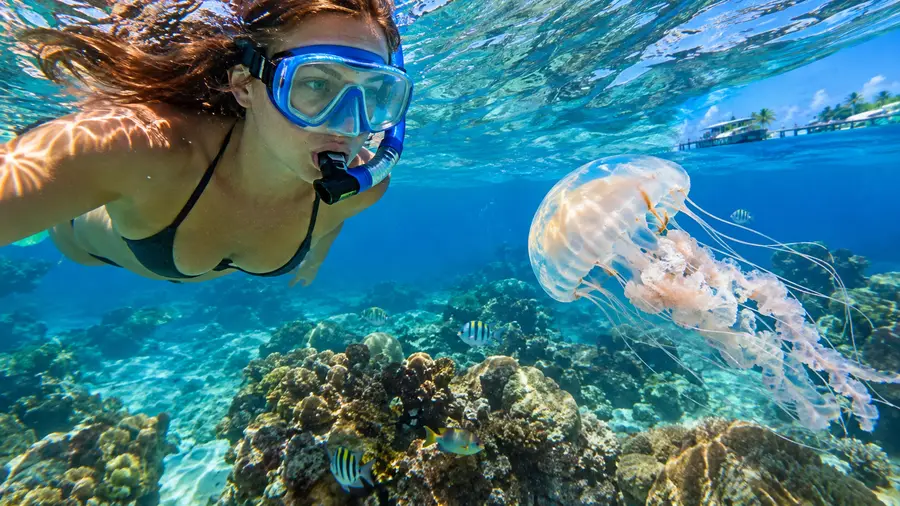
Jellyfish in Belize: What Swims in These Waters?
People often ask: are there jellyfish in Belize that you actually need to worry about? Yes, but they are not the lethal box jellyfish species you find around Australia or the Filipijnen. Most encounters involve mild irritants, though they are certainly painful enough to cut an outing short. True jellyfish, colonial hydrozoans, and microscopic larvae all drift through the shelf water at different points of the year.
The most common gelatinous visitor is the moon jellyfish. They look like translucent, saucer-shaped discs pulsing near the surface, usually about 6 to 10 inches across with four horse-shoe shaped rings in the center. Do they sting? Barely. Most people feel a mild prickle or nothing at all because their nematocysts cannot easily penetrate human skin, though touching your eyes or lips after handling one produces a miserable burning sensation.
The real troublemakers in the waters around San Pedro belong to two very distinct categories: Portuguese man-o'-war and the notorious seasonal larvae locally called pica pica. Knowing what you are looking at saves you from painful missteps.
| Stinger Type | Season / Peak | Typical Appearance | Sting Severity |
|---|---|---|---|
| Moon Jellyfish | Summer months | Clear translucent disc, 4 rings | Mild to negligible |
| Portuguese Man-o'-War | Winter winds (Jan - Mar) | Floating blue/purple gas bladder | Intense burning, sharp pain |
| Pica Pica (Thimble larvae) | Spring (March - May) | Invisible in water, tiny specks | Delayed, itchy rash (seabather's) |
| Sea Wasp (Carybdeid) | Rare, calm summer nights | Small cube-shaped bell, 4 tentacles | Moderate to sharp pain |
The man-o'-war is not a true jellyfish, but rather a siphonophore. Strong easterly trade winds blow them into the lagoon from the deep open sea outside the reef. Their gas bladders float high on the surface, glowing electric blue or violent purple. Below that tiny blue sail trails a tangle of tentacles that can stretch 30 feet through the water column. You might be swimming 15 feet away from the visible float and still drag your chest across a trailing tentacle. If you spot a blue float, climb back into the boat immediately.
Book your snorkeling san pedro belize experience:
The Truth About Pica Pica in San Pedro
If you travel to Belize between March and May, you will hear dive boat crews talking about pica pica. The term translates roughly to "itchy itchy," and it describes an irritating marine phenomenon. It is caused by the microscopic larvae of the thimble jellyfish (Linuche unguiculata). During spring, millions of adult thimble jellyfish - which look like harmless brown thimbles roughly an inch tall - spawn in the warm surface waters.
The larvae are almost completely transparent and impossible to spot with a standard snorkel mask. You swim through a bloom, feel tiny pricks that seem like harmless sand grains rubbing your skin, and think nothing of it. The real misery starts four to twenty-four hours later. The larvae get trapped inside swimsuits and against body hair. When you climb out, dry off, or shower in fresh water, the pressure and freshwater change trigger the larvae's stinging cells.
Pro tip: Strip off your swimwear before stepping into a freshwater shower after a spring snorkel, as fresh water causes unfired stinging cells trapped in the fabric to burst violently into your skin.
The resulting rash is called seabather's eruption. It looks like hundreds of angry red bumps, and the itching is intense enough to keep you awake for four nights straight. When travelers ask me to recommend jellyfish protection methods for swimmers based on effectiveness, physical barriers consistently beat chemical lotions every single time.
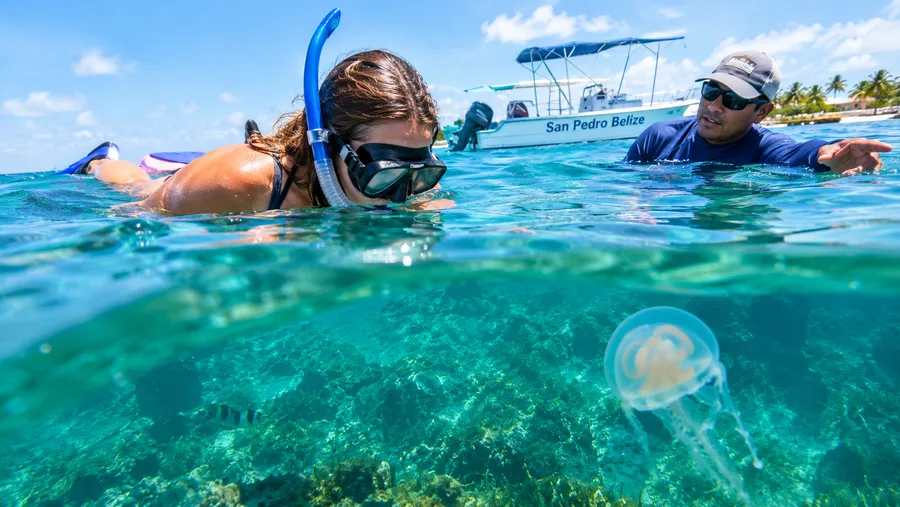
Smart Snorkeling Safety Precautions and Stinger Protection
Preventing stings comes down to gear and common sense. If you rely solely on bare skin and sunblock, you are leaving yourself completely exposed to accidental drift contacts. Wearing a thin protective layer changes everything.
A full-body lycra dive skin or a long-sleeve rash guard paired with athletic swim leggings creates a physical barrier that larvae and tentacles cannot penetrate. Even standard thin fabric stops the trigger mechanisms on nematocysts from reaching live skin. If you are preparing your gear list, look over our breakdown on what to pack for a Belize snorkeling trip to make sure you bring proper coverage instead of basic resort swim trunks.
- Full rash guards: slip on tight-weave nylon-spandex tops and bottoms, leaving as little exposed skin as practical during spring months.
- Safe Sea lotion: apply this specialized blocker before getting wet; it contains compounds that deactivate stinging sensors on jellyfish tentacles.
- Vinegar rinse: douse true jellyfish stings in household white vinegar for 30 seconds to neutralize undischarged nematocysts before touching the skin.
- Scrape, never rub: remove clinging tentacle fragments with a credit card edge or sea shell; rubbing with a towel drives the remaining venom deep into your dermis.
Keep a small bottle of vinegar in your daypack. Most San Pedro snorkel boats keep a jug aboard because tourists brush against hydroids on dock pilings or reef structures almost daily. Never rinse any suspected marine sting with fresh water unless all tentacle residue has been scraped off and neutralized, otherwise you will trigger hundreds of dormant stinger cells instantly.
Hydrocortisone cream and oral antihistamines help tame the lingering inflammatory itch from pica pica. Local pharmacies along Front Street in San Pedro keep large stocks of antihistamines specifically for travelers hit by spring blooms. A hot shower - as hot as you can comfortably tolerate - often breaks down the protein toxins after the initial neutralizing wash is done.
Frequently Asked Questions about snorkeling safety tips
Are there dangerous sharks along with the currents at the reef?
The nurse sharks you encounter at sites like Shark Ray Alley are docile bottom-feeders that pose virtually zero threat unless deliberately harassed, grabbed, or cornered by reckless swimmers.
Can you snorkel safely without fins in San Pedro?
No, you should never snorkel the barrier reef without fins. Wind-driven surface currents and tidal flow around coral heads demand the propulsion and maneuverability that proper fins provide.
What should I do if a jellyfish stings me while swimming?
Exit the water calmly, avoid rubbing the area with your hand or a dry towel, rinse the site with saltwater or white vinegar, and gently scrape away leftover tentacles using a firm plastic card.
Quick Reference
- Hol Chan channel features strong tidal drift
- Pica pica season runs March through May
- Full-body rash guards offer best stinger defense
- Never rinse active marine stings with fresh water
Book your snorkeling san pedro belize experience:
Before You Go
Respecting the ocean is what separates an incredible reef adventure from an exhausting ordeal. Take a few minutes to check wind conditions, talk to your boat captain about tidal patterns for the day, and pull on a protective layer if water bugs are in the forecast. Once you have these simple habits dialed in, you can relax, drift along the reef wall, and watch the Belizean underwater world do its thing in complete peace.
Read more about snorkeling san pedro belize.